I’ve returned to the studio. This past year pulled me away from painting, though it never truly stopped. Knitting filled the gap and the dexterity it demanded kept me sane. The more I explore the history of knitting and needlecraft, the more meaningful it becomes to me. The origins of needlework are obscure, yet archaeological finds show early humans buried with beaded jewelry and intricate textiles, thought to have served spiritual or decorative purposes and/or essential practical means to protect from the elements. Before all that was the invention of string and thread, a development that shaped human evolution and migration for millennia.
“So powerful, in fact, is simple string in taming the world to human will and ingenuity that I suspect it to be the unseen weapon that allowed the human race to conquer the earth, that enabled us to move out into every econiche on the globe during the Upper Paleolithic. We could call it the String Revolution.”
Thread gave us cloth, clothing, netting, just a few of the crucial things that led to the advanced tools and textiles we now take for granted. Industrialization stood to tear down the slowness that this skill requires but it remains to be the touchstone to many people lives as a way of survival. Not just by means of warmth for our skin but to also make human connection and stay present.
Snapdragon Life. “Your Brain Changes When You Make Things - Here’s the Research.” YouTube, 9 Oct. 2025, www.youtube.com/watch?v=X4BKRcqgBY8. Accessed 23 Feb. 2026.
The presence being mentioned is beyond being grounded in the moment but also in a far more encompassing way. Jane Lindsey in this short Youtube video discusses the value in two-handed dexterous activities such as knitting and the benefits to neurological health with age. She has linked her sources and goes into deeper detail in her own words on her wonderful blog- linked here.
My most recent works in progress explores these ideas through layered, experimental play. (e.g.. slapping some oil paint on a canvas) See below a painting that’s currently in it’s early stages.
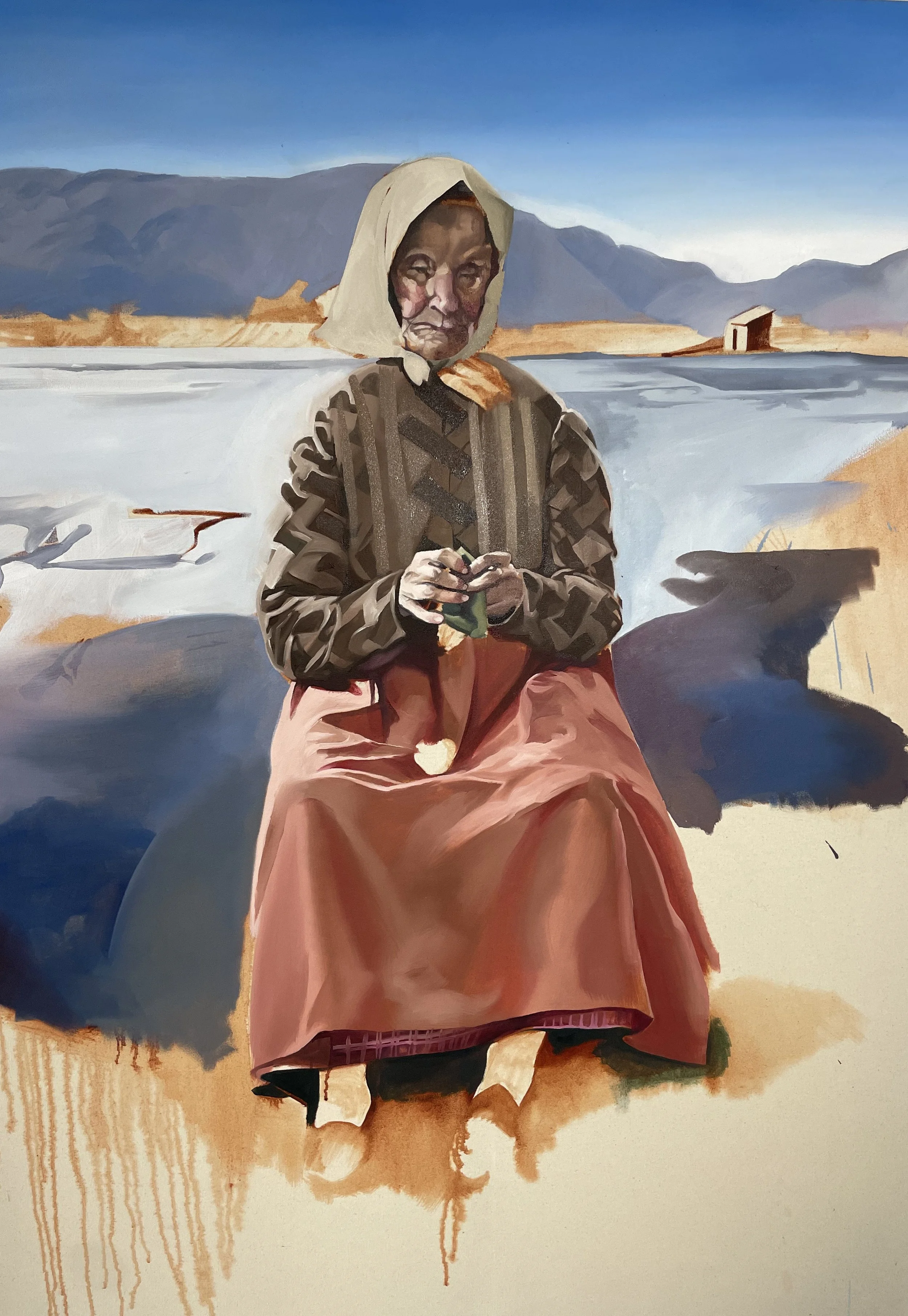
Work in progress. 02/22/2026
My primary reference is an archived 1912 photograph from the Östergötlands Museum by August Christian Hultgren (1869–1961). It depicts Katarina Bram (1820–1919), a resident of the Svinhult’s Bona poorhouse. Local records indicate she suffered poverty and the loss of a spouse; unable to support her disabled daughter on her own, they entered the poorhouse sometime after her husband’s death in 1872. Like many women of the period, Bram likely turned to knitting as a modest source of income. During her life she may have had access to sheep, wool and fleece and spun her own yarn. But the reality in her late life and situation she may have worked with a very small supply of yarn that she repeatedly knit and unraveled, a repetitive task that also helped occupy her mind. It was likely a task she associated with productivity and purpose, a small ritual that tied her to the present. Looping the yarn through familiar patterns, throwing stitches, and swapping out her needles row after row, after a lifetime had become instinctive and quiet.
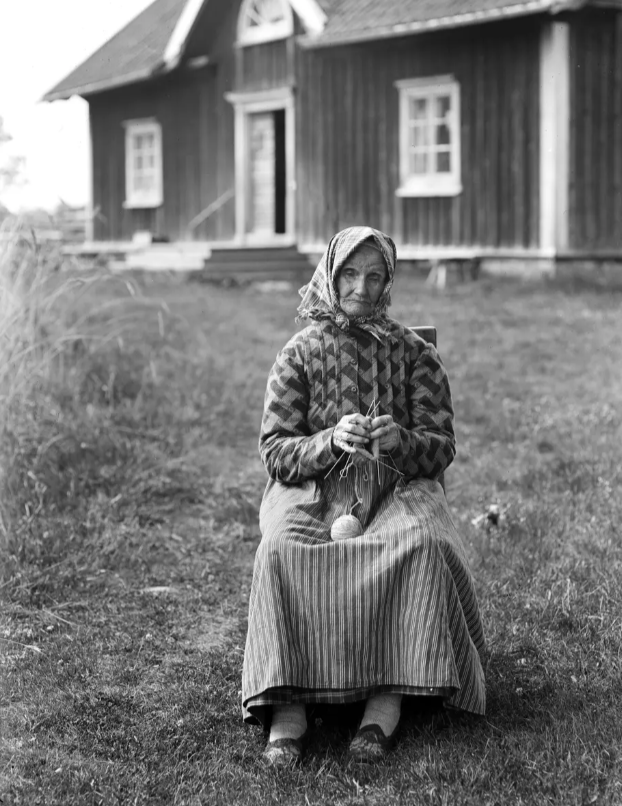
Östergötlands museum. “Katarina Bram (1820-1919),” Digital Museum , 16 May 2016, digitaltmuseum.se/021016422748/katarina-bram-1820-1919. Accessed 23 Feb. 2026.